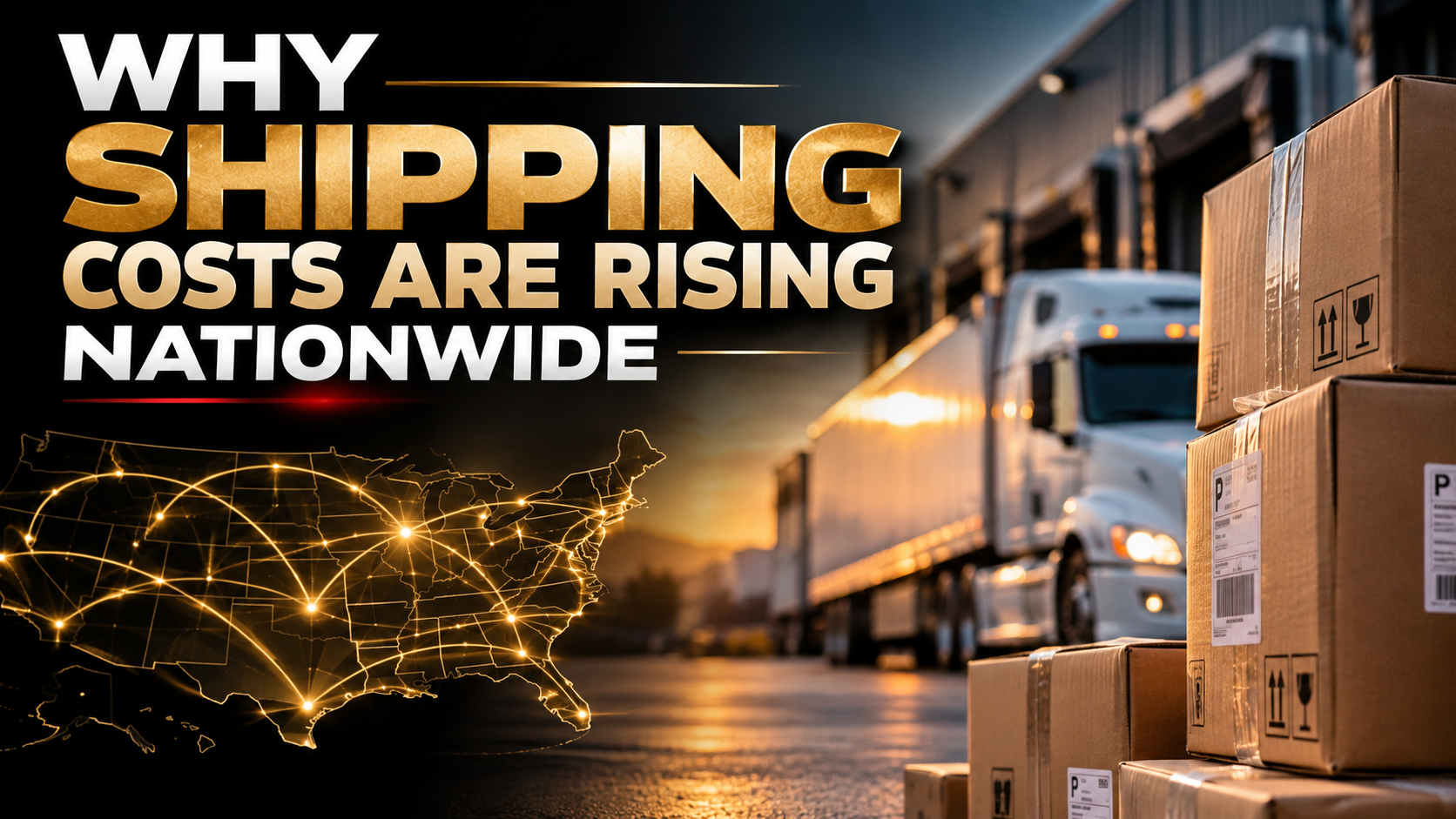
Shipping costs are becoming an increasingly important part of online shopping. From small businesses shipping individual products to major retailers delivering orders across the country, rising transportation expenses, seasonal surcharges, and carrier rate adjustments are putting additional pressure on the cost of getting packages from one place to another.
For customers, it can be frustrating to see shipping charges increase. For small businesses, it creates a difficult balancing act: keeping products affordable while covering the growing cost of fulfilling orders.
What’s Driving the Increase in Shipping Costs?
Shipping prices are influenced by more than just the distance a package travels. Several factors contribute to the overall cost of delivery.
1. Fuel and Transportation Expenses
Fuel is a major operating expense for delivery networks. Trucks, aircraft, and other transportation vehicles require significant amounts of fuel to move packages throughout the country.
When fuel prices rise, carriers may adjust their pricing or apply fuel-related surcharges to help offset those expenses. These adjustments can affect shipping costs for businesses and consumers alike.
2. Carrier Rate Increases and Additional Fees
Major shipping carriers periodically revise their rates and fees to account for changing operating costs and network demands.
For example, the U.S. Postal Service introduced temporary price adjustments for certain package services beginning October 4, 2026, with the changes scheduled to end January 17, 2027. FedEx has also announced holiday demand surcharges and an average 5.9% increase in its standard package list rates effective January 4, 2027.
These changes illustrate how shipping expenses can rise through both regular rate adjustments and temporary surcharges. Actual costs vary by carrier, service, package size, weight, and destination.
3. Package Size, Weight, and Distance
Not every package costs the same to ship. A small, lightweight item traveling a short distance may be relatively inexpensive to deliver, while a large or heavy package traveling across the country can cost considerably more.
Package dimensions matter, too. Oversized packages may require additional handling, take up more space in delivery vehicles, or incur special fees.
For automotive accessories and other specialized products, packaging must also protect the merchandise during transit. Reducing packaging costs cannot come at the expense of safe delivery.
4. Seasonal Shipping Demand
Shipping networks experience increased demand during major shopping periods, particularly around the holiday season.
When package volumes rise, carriers must manage additional transportation, sorting, handling, and delivery demands. Temporary peak-season fees can increase the cost of shipping certain packages even when the product itself has not changed in price.
For online shoppers, this means shipping costs can fluctuate depending on when an order is placed and which delivery service is used.
How Rising Shipping Costs Affect Small Businesses
Large retailers may have the resources and shipping volumes necessary to negotiate favorable carrier rates. Smaller businesses often have fewer options.
Independent retailers must account for shipping expenses while also covering merchandise costs, packaging, marketplace fees, payment processing, and everyday operating expenses.
When shipping rates increase, a small business generally has three choices:
- Absorb the increase: Keep the customer’s shipping charge unchanged, accepting a smaller profit margin.
- Adjust product prices: Spread some of the additional expense across product pricing.
- Update shipping charges: Pass some or all of the additional shipping expense along to the customer.
None of these options is entirely painless. Absorbing every increase may not be sustainable, while raising product prices or shipping charges can make it harder for customers to find an affordable deal.
Why Shipping Isn’t Always Profitable for Retailers
One common misconception is that shipping charges represent additional profit for the seller. In reality, the amount a customer pays for shipping may not cover the retailer’s full fulfillment expense.
Depending on the order, the seller may also pay for a shipping box or mailer, protective materials, packing supplies, postage adjustments, and additional handling.
Shipping costs can also change after a retailer establishes its original product pricing. A shipping charge that covered an order’s delivery expense several months ago may no longer cover the same shipment today.
Responsible retailers must continually review these costs to keep their businesses operating sustainably.
What Can Online Shoppers Do to Save on Shipping?
Although customers cannot control carrier pricing, there are several practical ways to manage delivery expenses.
- Compare available shipping options. The least expensive service can vary based on the package’s weight, dimensions, and destination.
- Avoid unnecessary expedited shipping. Standard delivery may be sufficient when an order is not time-sensitive.
- Consider combining purchases. When practical, ordering multiple items together may reduce the total shipping expense compared with placing separate orders.
- Check the complete order total. Compare the product price, shipping charge, and any other applicable fees rather than evaluating an item by its advertised price alone.
- Look for local pickup options. When offered by the retailer, local pickup may eliminate shipping charges altogether.
The goal is not simply to find the lowest advertised shipping price, but to find the best overall value for the order.
Our Commitment to Fair Pricing
At Stylin Werkz, we understand that customers want quality automotive accessories at competitive prices. We also understand that unexpected shipping expenses can affect the overall cost of an order.
As an independent retailer, we must work within the rates and fees charged by shipping carriers while continuing to offer products at reasonable prices.
We believe in being transparent about these challenges. Shipping charges are based on the cost of getting an order to its destination, and changes in carrier pricing can affect what it costs to fulfill an order.
We will continue to evaluate available shipping options and look for practical ways to keep our products and delivery options competitive.
The Bottom Line
Shipping is an essential part of online shopping, but the cost of delivery is influenced by factors that extend well beyond the retailer’s control.
As carriers adjust their rates, introduce seasonal surcharges, and respond to changing operating expenses, both businesses and customers must adapt.
Understanding what goes into shipping costs helps explain why delivery charges can change, even when the product being purchased remains exactly the same.
Thank you for supporting small businesses like Stylin Werkz. Every order helps independent retailers continue serving customers with the products, service, and value they deserve.